Stinky perhaps but good for you, the Cruciferous vegetables include spinach, kale and brussels sprouts. Read my latest article from Cityview Magazine here: http://bit.ly/1eNbvQT


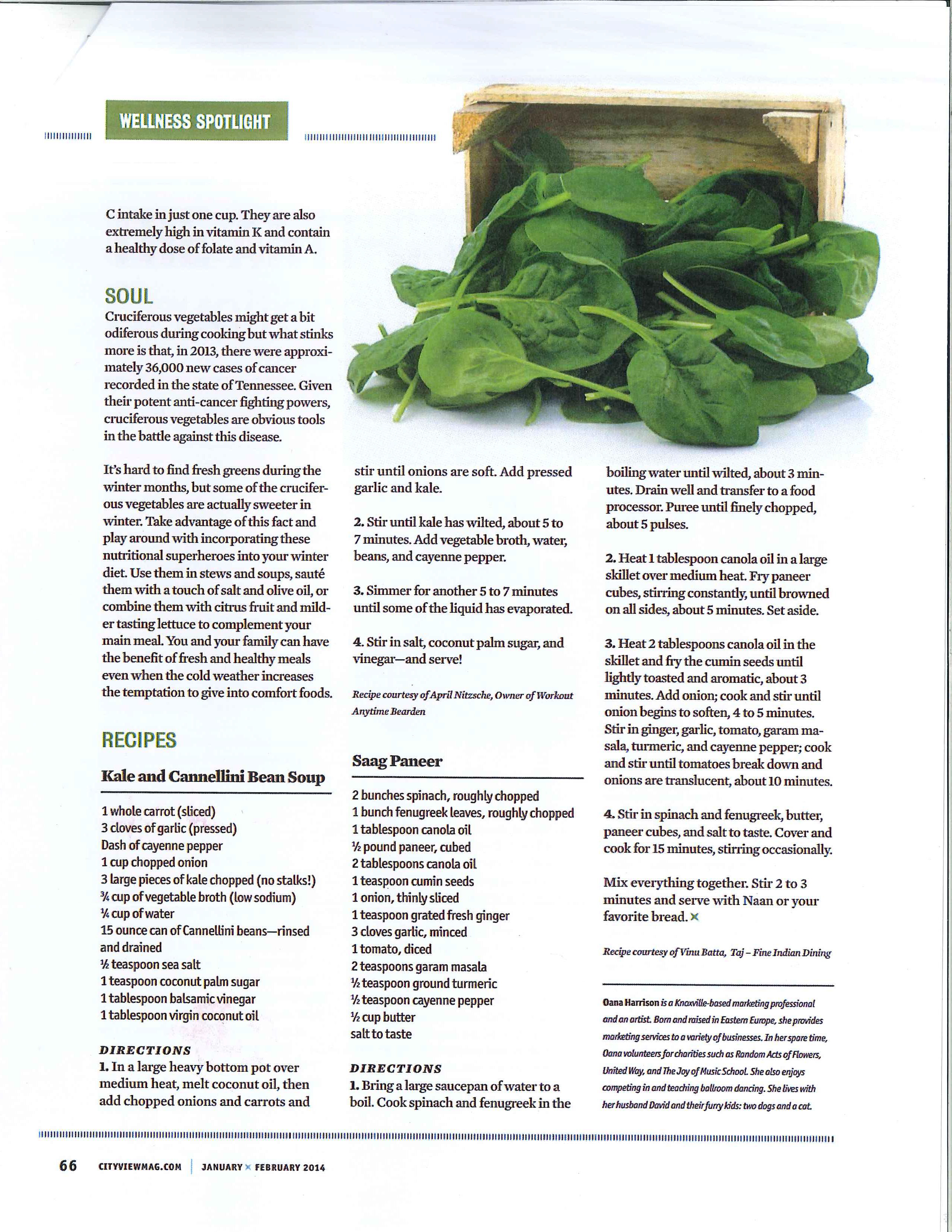
Stinky perhaps but good for you, the Cruciferous vegetables include spinach, kale and brussels sprouts. Read my latest article from Cityview Magazine here: http://bit.ly/1eNbvQT
By Oana Harrison
Smaller than a grape or larger than a grapefruit, these fruits (not vegetables) are yellow, red, purple, or green – and anywhere in between! Slice them, dice them, eat them fresh — can or pickle them! Solanum lycopersicum might be their scientific name — but variety is their middle name.
There are hundreds of varieties of tomatoes. Known as “love apples,” tomatoes were once feared to be poisonous – and later thought to have aphrodisiac powers. Today, we love tomatoes because of their cancer-fighting antioxidants, power-punch of vitamin C – and because they taste so good.
We’ve all heard about Heirloom tomatoes but what exactly are they? Heirlooms are “old-fashioned” tomato varieties that are not suited for “big box” commercial growth, either because they have a short shelf life, or because they are thin-skinned and thus prone to damage in transport, or because their taste is not “main stream.” Heirloom tomatoes come in all colors of the color wheel (well, maybe not in blue) — and can also be striped! They can be as small as a blueberry or as large as 2 pounds. The main categories are currant, cherry, plum, globe, oxheart, and beefsteak. Textures vary from very soft and juicy to meaty and firm; taste can be sweet or sour.
The best resources of Heirloom tomatoes are local farms or farmers’ markets. Local farms are usually family-owned and their love and dedication shows in their crops. “Local is more important than organic,” says Kristina McLean, a former producer and self-declared tomato addict. “Produce doesn’t have to be certified in order to be healthy. Getting certified may be too expensive for small family-owned farms and it’s understandable that they would rather spend their money otherwise. As long as I know who the farmer is, I can find out how they grow their crops.”
McLean should know: She used to raise about 60 types of tomatoes. “How could I not want to grow them when I see names like Aunt Ruby’s German Green, Moonglow, Cherokee Chocolate, Hillbilly, White Queen, Furry Yellow Hog, Depp’s Pink Firefly, Bloody Butcher, and Thai Red Turtle Egg?”
For Shannon Meadows, of Mountain Meadows Farm, growing tomatoes is a family tradition. She grows about 12 varieties each year and she chooses the types of tomatoes based on what her dad used to grow when she was young. Cherokee Purple is one of her favorites because of its history, beauty, and resilience. Color is another great factor influencing her choice. “The striped tomatoes are such fun and every year I must have at least one green tomato – it always throws everyone for a loop when I tell them that’s a ripe tomato,” says Meadows.
Summer provides a quilt of flavors and colors and you can easily find fresh fruits and vegetables — many times grown locally. Summer is always a good time to choose foods that are light and brightly colored. Chances are you will eat right because the elements that give the fruits and vegetables their bright colors are likely to be antioxidants.
Tomatoes are powerful fruits, containing all the major types of carotenoids, which are powerful antioxidants. These include:
Adding to the tomato’s disease-fighting power is its high content of potassium and vitamin C. Also called ascorbic acid, vitamin C helps to maintain healthy collagen in the skin, repair damaged tissue, promote healthy teeth and bones, and boost the immune system.
Rich in vitamins and antioxidants, tomatoes maintain and even increase their health powers through any type of cooking. Grilling tomatoes (cut side down) will not only intensify the flavor, but will also boost antioxidant power by converting lycopene into a form more easily used in the body. The same is true for flavonoids, antioxidants found in the fruit’s skin. Studies suggest that even processed tomato products such as juice, paste, or sauce can increase the body’s cancer-fighting potential. So, if you are looking for a summer-friendly and tomato-intensive diet, go with a Mediterranean diet. It is balanced and contains many delicious recipes that include tomatoes, in addition to many other healthy fruits, grains, and vegetables.
Summer time: Why not kick back, relax, and enjoy being a kid again? Dining “al fresco” with family and friends or relaxing by the pool are all summer favorites. After a day in the sun, there’s nothing better than a fresh salad or something off the grill and an iced drink (umbrella optional). So what can you get into this summer? Here are some healthy options:
Pool Side Story
Create unique memories by hosting a summer poolside party. Ask your guests to create a tomato-based dish and use the color variety of tomatoes to create beautiful center pieces and table displays.
Summer Fresh, Farm Fresh
Take your family to visit a local farm. You can usually call ahead and schedule a visit: Do you want to pick your own produce, volunteer, or simply look around? If you are ready to commit to buying fresh local produce regularly, one good choice is to buy into a Community Supported Agriculture (CSA) option. CSAs provide fresh produce for you weekly or monthly, based on what’s in-season. Many farms will have your “basket” of goodies available for pick up at a farmers’ market. Not only will you be eating well but you will be supporting a social model that connects you to your food, the land, and with those that tend the soil. It is an opportunity to place your food dollars directly in the hands of a family farm you know, a farm that adopts sustainable practices and caters to the health and nutritional value of your food.
Self-Sufficient Joy
There is pride and joy in growing your own garden. You feel self-sufficient and can create beautiful landscapes using the different colors and textures tomatoes. Throw in some herbs and you’re guaranteed a fresh salad! Ask the local farms if you can purchase either seeds or plants to jump start your back yard garden — and start playing in the dirt!
Anyone Can Cook
As Chef Gusteau said in Ratatouille, “Anyone can cook.” So put on your (imaginary) toque (chef’s hat) and start cooking with tomatoes. If you don’t know how, try a cooking class, such as the ones offered by the University of Tennessee on baking, canning, and international cuisine: http://noncredit.utk.edu/culinary/cooking.asp . Or, find some quick advice and recipes on line, on one of Knoxville’s top food blogs: http://www.urbanspoon.com/bgs/68/knoxville-restaurant-blogs.
Yes, You Can
There are only so many tomatoes you can eat during one summer. Save some goodness for later by canning. Read up on easy ways of how to do so on expert blogs such as cookbook writer and food blogger Marisa McClellan’s: www.foodinjars.com
When looking at tomatoes and other fresh fruits and veggies, take Kristina McLean’s advice: “Learn how to free-style cook: it’s difficult but possible. It’s summer – be creative and have fun with it!”
– Three Rivers Market: http://www.threeriversmarket.coop/
– Three Rivers Market lists several local, independent grocery stores that carry farm fresh or organic foods: http://www.threeriversmarket.coop/resources/local-food-guide/grocery-stores/
Find a Farmers’ Market in the Knoxville area:
– Market Square Farmers’ Market: 865-405-3135; marketsquarefarmersmarket.org
– Knoxville FARM Market: 3457 Kingston Pike, Knoxville, 865-992-0223; easttnfarmmarkets.org
– Farm Fresh Produce: 3617 Sutherland Avenue, Knoxville, 37919; 865- 588-4017
– Vintage Quest Acres CSA Farm: North Campbell Station Road, Knoxville, 423-442-7291; poweredbynature.net
– Deep Well Farm: 9567 U.S. 11, Lenoir City, 37772; 865-803-4425; deepwellfarm.com
– Oak Ridge FARM Market: East Tennessee Avenue, Oak Ridge, 865-406-0366; easttnfarmmarket.org
– Find more: http://easttnfarmmarkets.wordpress.com/
– Listing of Knoxville-area farms by county: http://www.agriculture.state.tn.us/Marketing.asp?qstring=VEG_HERBS
Find Family-Owned Farms around Knoxville:
– Fruits & Vegetables:
– Mountain Meadows Farm: 248 Bridges Road, Heiskell, Tennessee 37754; 865-494-9709; www.mountainmeadowsfarmtn.com; mountainmeadowsfarm@gmail.com
– Colvin Family Farm: 1045 JB Swafford RD, Spring City, Tennessee 37381; 866-865-8329; colvinfamilyfarm.com; CustomerSupport@ColvinFamilyFarm.com
– Herbs:
– DiEva’s Herb Farm: ajdieva@gmail.com
– Erin’s Meadow Herb Farm: 132 England Lane, Clinton. Tennessee 37716; 865-435-1452, http://www.erinsmeadowherbfarm.com
– Dixie Lee Greenhouse: 921 Fretz Road, 865-675-5812; dixieleegh@gmail.com
Dairy:
– Cruze Farm: 3200 Frazier Road, Knoxville, 865-659-0137; Cruzeccruze@aol.com
Basil, Feta, and Tomato Sandwiches
Toast some sandwich bread.
Measure out the following ingredients:
— 2 Tablespoons crumbled feta
— 2 tablespoons mayo
— 1 tablespoon lightly packed chopped basil
Mix together and spread on toasted bread while toast is still hot so that the cheese will melt.
Slice a tomato and add to the sandwich.
Eat with plenty of paper towels close by.
Marinated Sun-dried Tomatoes
1 cup extra-virgin olive oil
1/4 cup balsamic vinegar
1 teaspoon lemon juice
1/4 cup fresh chopped parsley
1 tablespoon chopped rosemary
Dried pepper flakes to taste
Salt and pepper to taste
3 to 5 cloves of garlic
Tomatoes, cut into bite size pieces (recommended: five pounds at a time)
Mix everything together (except the tomatoes) in a large bowl. Add tomatoes and marinate for at least several hours in the refrigerator (best: marinate overnight). Remove tomatoes from marinade and spread out on dehydrator trays and dry until desired doneness. (Recommended: Remove half while they’re still fairly pliable and let the rest dry until they’re completely dry.) These can take anywhere from 12 to 24 hours to dry. Since there’s so much oil in the marinade, store the dried tomatoes in the freezer to keep all winter long.
Note: Save the marinade and use it to marinate vegetables or chicken before grilling or use as a salad dressing.
Courtesy of Kristina McLean (find more of Kristina’s recipes at www.mouthfromthesouth.com)
Momma Sue’s Red Sauce
2 medium carrots, grated
1 large sweet onion, chopped
1 to 2 tablespoons olive oil
4 to 6 garlic cloves, chopped
3 to 4 fresh tomatoes, chopped (heirloom are preferable)
1 to 2 small zucchini, coarsely chopped
1/2 sweet bell pepper (red, yellow, or orange), coarsely chopped
Salt and pepper to taste
Fresh basil and/or oregano, chopped
Pecorino Romano cheese, freshly grated
Heat olive oil in pan and add carrots and onions. Turn heat down and cover pan to sweat a few minutes. Add garlic to saute until fragrant. Add tomatoes, zucchini, bell pepper, salt, and pepper. Saute a few minutes. Serve over your favorite pasta. Top with fresh basil/oregano and grated cheese.
Courtesy of Shannon and Sue Meadows, Mountain Meadows Farm (find more recipes at www.moutainmeadowfarmtn.com/recipes)
By Oana Harrison
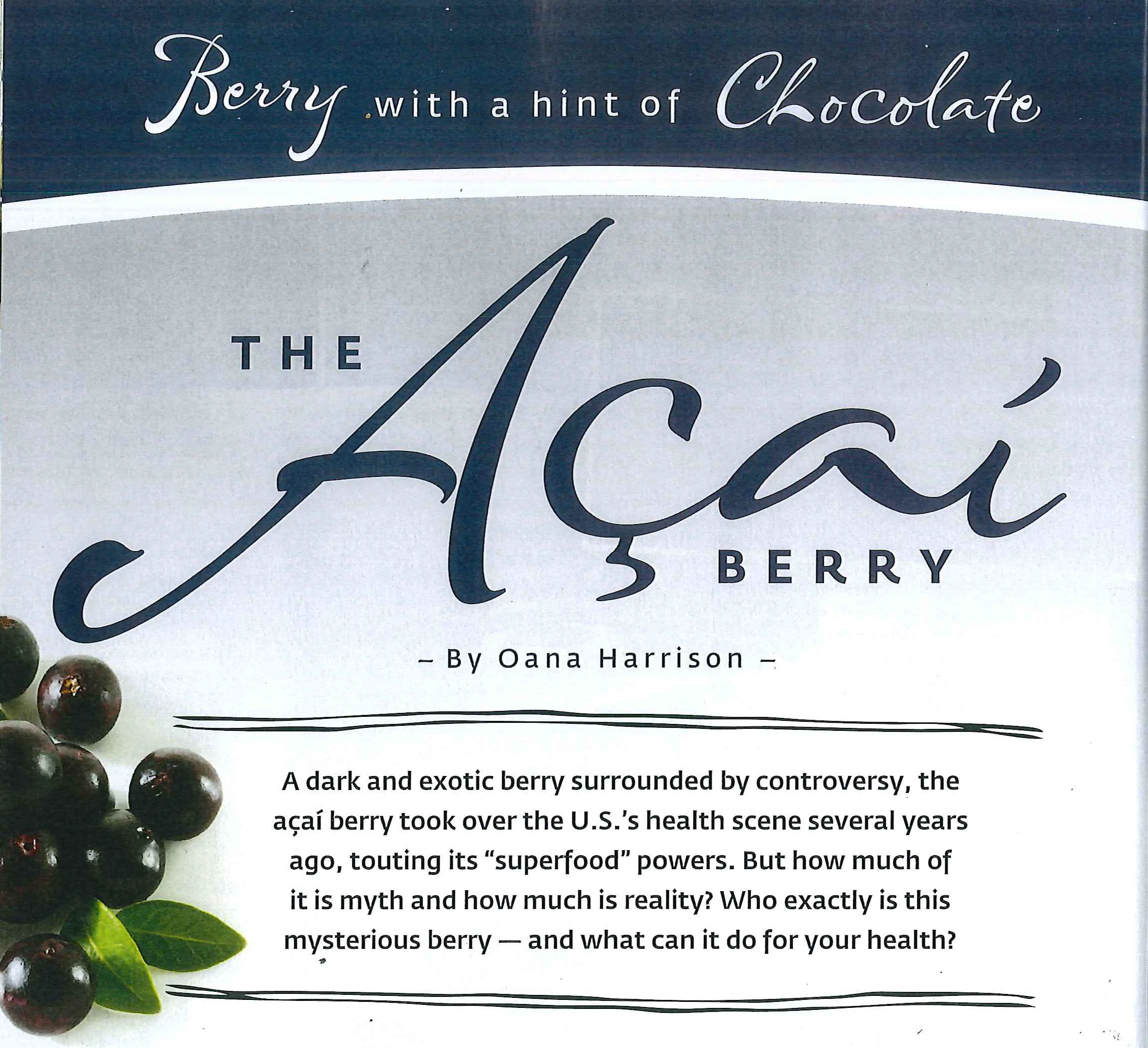
A dark and exotic berry surrounded by controversy, the acai berry took over the U.S.’s
health scene several years ago, touting its “superfood” powers. But how much of it is myth and how much is reality? Who exactly is this mysterious berry — and what can it do for your health?
Legend has it that, long ago, there was an indigenous tribe living in the area of Belém do Pará, Brazil. It was a hard time, when food was scarce and many were dying of hunger. The tribe’s Chief Itaki made a drastic decision to sacrifice all the new born children and even his beloved daughter’s child wasn’t spared. The Chief’s daughter Iaçá cried and prayed to God Tupã to show her father another way to help eliminate hunger. One night, Iaçá heard a child’s cry and followed the sound into the forest, to a beautiful palm tree, where a vision of her son appeared. She went to hug her son but the vision disappeared. In the morning Iaca was found dead, hugging the trunk of the palm tree, which was laden with small dark fruit. Itaki ordered the fruit to be harvested and, in honor of his daughter, named the fruit Açaí, which is precisely the name Iaçá reversed.
The acai berry (pronounced “ah-sigh-EE”) is a grape-like fruit that is a good source of antioxidants (anthocyanin), fiber, and omega-6 fatty acids. The fruit is about the size of a large blueberry yet only the outermost layers of the fruit, the pulp surrounding a large internal seed, are edible. The berries are harvested from acai palms, which are some of the same trees used to harvest edible hearts of palm. Proponents of its superfood status claim the acai berry supports weight loss, lowers cholesterol, and promotes detoxification. However, scientists and nutritionists agree that more research is needed on the berry’s true effect on human health. The acai berry is commonly used in juices, beverages, smoothies, frozen treats and dietary supplements.
“While acai berries seem to have a variety of antioxidants and anti-inflammatories, we can’t expect them to neutralize the effect of life in the drive-thru restaurant line,” says Beth A. Booker, a Registered Dietitian/Nutritionist at Ft. Sanders Health & Fitness Center. “Acai berries [are only] one part of the equation. It is important to [support your diet with] a wide variety of fruits and vegetables, [in order to balance] your nutrient intake. When in doubt, always choose brightly colored fruits and vegetables [and add] whole grains and lean proteins to maximize the nutrition available from your food.”
“Acai berries contain high levels of anthocyanins. which are responsible for their dark blue-purple color. These powerful chemicals provide antioxidant protection, which may forestall aging and disease processes, “ Beth explains.
The origin of the word “anthocyanin” is Greek, from the words meaning “plant” and “blue.” Anthocyanins provide the rich red, purple, and blue hues in many fruits, vegetables, and flowers. Foods richest in anthocyanins, such as acai, blueberries, and red grapes, have the deepest colors, ranging from deep purple to black.
Anthocyanins and flavonoids are powerful antioxidants that enhance the body’s cell protection system. Consuming a diet rich in antioxidants may help combat some of the harmful free radicals leading to disease and aging process. By lessening the destructive power of free radicals, antioxidants may help reduce the risk of some diseases, such as heart disease and cancer.
Although no conclusive studies have been conducted on humans, it is believed that the anthocyanins isolated from the acai berry were able to eradicate human leukemia cells. In a study conducted by a group of Texas AgriLife Research scientists on 12 healthy people[SF1] , the subjects had slightly higher measures of antioxidants in their blood than people getting a placebo. Research showed that, theoretically, the berry’s stimulation in antioxidant activity might help prevent diseases caused by oxidative stress such as heart disease and cancer. “Acai berries are a good source of antioxidants, fiber, and heart-healthy fats, but research is limited, and many of these claims haven’t yet been proven,” warns Ms. Booker.
Acaí berries also contain healthy fatty acids, such as oleic acid, one of the same oils found in olive oil. Most experts agree that oleic acid is one of the better fats for humans to consume, believing that it helps lower total cholesterol levels.
Acai Berry claims to fame:
Acai is naturally low in sugar, with a flavor often described as a mixture of red wine and chocolate. Because of its low sugar content, when available in juice form, it might contain added sugar, so make sure to check the food label for carbohydrates levels. Here are some favorites you can find in grocery stores:
Due to their high content of anthocyanins, the acai berries have a deep purple color and are therefore easily used as natural food coloring. So next time you are in the kitchen, mix up some acai berry puree into a fresh batch of vanilla ice cream and decorate each bowl with fresh mint leaves for a lovely and exotic treat.
The straw made from acai leaves can be turned into hats, baskets, or brooms. Use the seeds for crafts to create bead necklaces. Use them in their natural brown color or dye the beads and turn them into fashionable accessories.
Purple hues can be both soothing and energizing, depending on the color combinations chosen. Decorate your “quiet” corner with relaxing deep purple tones, add some dark blue pillows and lighten things up with sage green accents. Light up a berry-scented candle and choose your music depending on your mood. Try Putumayo’s Brazilian Lounge or Acoustic Brazil for relaxation and Brazilian Groove for gaining some energy. Find the CDs at Earth to Old City in Downtown Market Square or on line at http://www.putumayo.com/putumayo_cds/brazil. Not only will you get a glimpse into the exotic culture of Brazil through their traditional rhythms but you will be supporting a great cause. Part of the proceeds will go towards helping communities in the countries where the music originates. Charitable recipients include Amnesty International, Coffee Kids, Oxfam, Mercy Corps, and many more.
Acai Berry Smoothie
1 1/4 c. plain or vanilla soymilk, or almond milk
3/4 c. Orange juice
3/4 c. Acai juice
1 large Mango, peeled, seeded and cut into chunks (use frozen mango chunks for an extra thick smoothie)
1 c. fresh or frozen blueberries
Serves 2
Courtesy of Beth A. Booker MS, MPH, RD, LDN
Acai na Tigela (Acai in a bowl)
Pulp
Topping
Pulse in blender until achieving the consistency of a soft ice cream.
Serve in bowl with halved strawberries and granola as topping.
Recipe courtesy of Maira Quillin
Go online to find more recipes:
http://www.riolife.com.au/acai-berry-recipes/
http://navitasnaturals.com/recipes/category/3737/Acai.html
http://www.acaiberryway.com/acai-berry-recipes/
As seen in Cityview Magazine, March/April 2013

Why Green Tea Should Be Your Cup of Tea
By Oana Harrison
Mind
Legend says tea was invented accidentally by the Chinese Emperor Shen Nong in 2737 B.C. Emperor Shen Nong was a scholar and herbalist, as well as a creative scientist and patron of the arts. Among other things, the emperor believed that drinking boiled water contributed to good health. By his decree, his subjects and servants had to boil their water before drinking it as a hygiene precaution. One summer day, while visiting a distant region, he and his entourage stopped to rest. The servants began to boil water. Dried leaves from a nearby camellia bush fell into the boiling water and infused it with their aroma. The emperor drank the infusion and enjoyed its refreshing and delightful flavor. He then declared that tea gives vigor to the body and from then forward tea has been regarded as a medicinal beverage. By 300 A.D. tea became a daily drink. Eventually, this magical drink made its way around the globe and today it is praised for its healing properties not only on the body but also for the mind and soul.
According to Chinese tradition, there are several things one should keep in mind when it comes to tea etiquette:
– In Chinese culture, the ritual of pouring tea for someone is part of many social interactions. Visitors into one’s home are served tea as a sign of welcome. When getting married, a couple kneels on the floor and passes the tea to their parents as an expression of their gratitude. When apologizing, one stands up, bows and pours tea for the person accepting the apology. Pouring tea for someone is a sign of politeness.
– Having the spout of the teapot facing anyone may be regarded as a bad manner in a proper tea ceremony.
– When someone pours tea for you, lightly knock two fingers on the table and say “thank you.”
– For real Chinese tea, adding sugar is like pouring soda into your red wine.
– In any setting, formal or informal, you should always tend to anyone whose cup is not full before filling your own. It’s regarded as being “selfish” or “impolite” to do otherwise.
Meanwhile, let us have a sip of tea. The afternoon glow is brightening the bamboos, the fountains are bubbling with delight, the soughing of the pines is heard in our kettle. Let us dream of evanescence, and linger in the beautiful foolishness of things.
– Okakura Kakuzo
Body
Food for thought: Studies show that green tea drinkers are less likely to display signs of cognitive impairment as they age. Some of this effect is attributed to green tea’s caffeine content, which increases blood flow to the brain.
Tea vs. Cancer: Green tea packs a powerful punch with more than 30 antioxidants, called polyphenols. One of these antioxidants in particular, called catechin or EGCg (short for epigallocatechin gallate) is exclusively found in green tea. Antioxidants scavenge for free radicals that can damage DNA and contribute to cancer, blood clots, and arteriosclerosis. The jury is still out, but some research shows that if consumed over a long period of time, green tea can inhibit cancer cells growth and kills cells that are growing inappropriately.
It just warms your heart… Green tea’s antioxidants are dilators, thus improving the flexibility of blood vessels and making them less vulnerable to clogging. Researchers found that drinking at least four cups of green tea every day may be related to the reduced severity of coronary heart disease.
Slimming down: Some research shows that green tea helps reduce LDL or “bad” cholesterol. Green tea has been the star of several movie star diets. Among the “celebri-teas” are Oprah, Gwyneth Paltrow, Jennifer Aniston and Christina Aguilera. Guys like to tea it up too. Robert Pattinson of Twilight drinks tea while filming on set. Elton John enjoys tea regularly and he also collects antique tea sets. Simon Baker from The Mentalist says he loves “a good cuppa tea”, just like his character, Patrick Jane. Of course, the stars’ silhouettes might have had some additional help from personal dietitians and trainers….
Bottom line: Research suggests that incorporating at least a few cups of green tea into the daily diet will positively affect your health. Keep in mind though that however mighty the leaf can be, it still needs its friends: diet and exercise. For more information about green tea and health visit http://nccam.nih.gov/health/greentea.
Better to be deprived of food for three days, than tea for one. – Ancient Chinese Proverb
How to brew the perfect cup: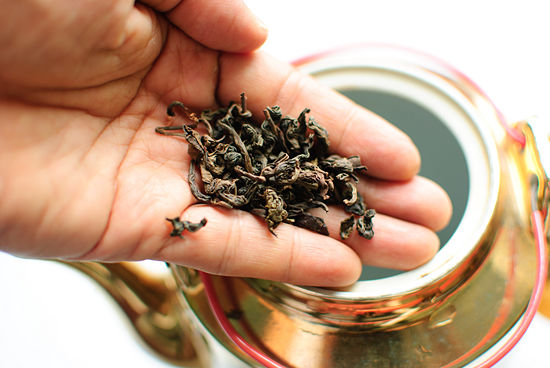
– Add a handful of leaves into a pot. For best results, always use loose leaves.
– Pour almost boiling water (160-170 F) over the leaves. Pouring boiled water will cause the immediate release of tannins, resulting in a bitter brew.
– Steep for 1 to 2 minutes.
– Pour out the water but keep the leaves in the pot.
– Add more almost boiling water into the pot.
– Steep for another 30 seconds to 1 minute.
– Pour and enjoy!
Soul
The warmth of a cup of tea alone has an immediate relaxing and comforting effect. One cannot think about tea without thinking yoga or meditation. But you don’t have to be striving to achieve enlightenment. There is intrinsic power in the ritual of brewing a pot of tea, in the act of creating and in the slow and thorough enjoyment of every sip. The tea ritual provides the grounding necessary to get through the day-to-day happenings. Enjoy a new morning ritual of your own, creating a “me” moment that we all so desperately need before another hectic day. You can use “tea time” for reconnecting with family and catching up with friends. Involve your significant other or friends into the quest for the perfect new blend: create your favorites by combining different tea flavors.
Don’t limit your green tea experience to the brew alone. There are many other ways to enjoy its qualities by including it in your home. Green tea candles, home fragrance oils, or incense can give your living space a refreshing vibe. A lemon and green tea scented candle can energize your work space and give it a clean smell.
There is more to tea than…well, tea. The best tea leaves can be eaten. Leaves left over from steeping can even be used in salads. Green tea can be an ingredient in a variety of foods ranging from seasoning for meats to ice cream. See the next page for a couple of favorite recipes.
Like The Minister of Leaves (The Republic of Tea company) writes on one of their green tea bags: “Nature insists that green is the color of awakening.” Come to think of it, green signals the beginning of spring, a time of rejuvenation and growth. So let your home decor be inspired by green tea. Use hues of green with blue or lavender accents to create a peaceful retreat. Add a pop of color like orange, orange-red or yellow to liven things up (for more inspiration, see http://www.houzz.com/photos/44710/Details-asian-living-room-other-metro).

Recipes
Cocktail recipes Courtesy of Amie Snyder, Mixologist/ Bar Manager at Sapphire, Knoxville
 nquility Cocktail
Courtesy of Patrick Rathida of TOMO Knoxville
Patrick has been a chef for 13 years. Originally from Laos, he came to the US in 1998.
Mix 1 tbps. of Konacha with 2 tbps of Genmaicha into a tea strainer. Pour almost boiling water over the mixture and allow the water to collect into a tea cup/mug. Enjoy!
Genmaicha – Japanese mix of green tea leaves and rice, roasted together. The rice will pop, resembling pop corn, thus the mixture’s colloquial name “popcorn tea”.
Konacha – Green tea leaves and buds, powdered.
Genmaicha will provide the taste, while Konacha provides the deep green coloring of the tea.
Find green tea in Knoxville:
Find green tea online:
 Oana Dance